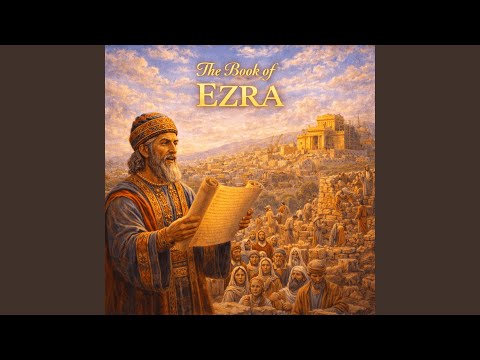
Ezra 10King James Version
1Now when Ezra had prayed, and when he had confessed, weeping and casting himself down before the house of God, there assembled unto him out of Israel a very great congregation of men and women and children: for the people wept very sore.
2And Shechaniah the son of Jehiel, one of the sons of Elam, answered and said unto Ezra, We have trespassed against our God, and have taken strange wives of the people of the land: yet now there is hope in Israel concerning this thing.
3Now therefore let us make a covenant with our God to put away all the wives, and such as are born of them, according to the counsel of my lord, and of those that tremble at the commandment of our God; and let it be done according to the law.
4Arise; for this matter belongeth unto thee: we also will be with thee: be of good courage, and do it.
5Then arose Ezra, and made the chief priests, the Levites, and all Israel, to swear that they should do according to this word. And they sware.
6Then Ezra rose up from before the house of God, and went into the chamber of Johanan the son of Eliashib: and when he came thither, he did eat no bread, nor drink water: for he mourned because of the transgression of them that had been carried away.
7And they made proclamation throughout Judah and Jerusalem unto all the children of the captivity, that they should gather themselves together unto Jerusalem;
8And that whosoever would not come within three days, according to the counsel of the princes and the elders, all his substance should be forfeited, and himself separated from the congregation of those that had been carried away.
9Then all the men of Judah and Benjamin gathered themselves together unto Jerusalem within three days. It was the ninth month, on the twentieth day of the month; and all the people sat in the street of the house of God, trembling because of this matter, and for the great rain.
10And Ezra the priest stood up, and said unto them, Ye have transgressed, and have taken strange wives, to increase the trespass of Israel.
11Now therefore make confession unto the LORD God of your fathers, and do his pleasure: and separate yourselves from the people of the land, and from the strange wives.
12Then all the congregation answered and said with a loud voice, As thou hast said, so must we do.
13But the people are many, and it is a time of much rain, and we are not able to stand without, neither is this a work of one day or two: for we are many that have transgressed in this thing.
14Let now our rulers of all the congregation stand, and let all them which have taken strange wives in our cities come at appointed times, and with them the elders of every city, and the judges thereof, until the fierce wrath of our God for this matter be turned from us.
15Only Jonathan the son of Asahel and Jahaziah the son of Tikvah were employed about this matter: and Meshullam and Shabbethai the Levite helped them.
16And the children of the captivity did so. And Ezra the priest, with certain chief of the fathers, after the house of their fathers, and all of them by their names, were separated, and sat down in the first day of the tenth month to examine the matter.
17And they made an end with all the men that had taken strange wives by the first day of the first month.
18And among the sons of the priests there were found that had taken strange wives: namely, of the sons of Jeshua the son of Jozadak, and his brethren; Maaseiah, and Eliezer, and Jarib, and Gedaliah.
19And they gave their hands that they would put away their wives; and being guilty, they offered a ram of the flock for their trespass.
20And of the sons of Immer; Hanani, and Zebadiah.
21And of the sons of Harim; Maaseiah, and Elijah, and Shemaiah, and Jehiel, and Uzziah.
22And of the sons of Pashur; Elioenai, Maaseiah, Ishmael, Nethaneel, Jozabad, and Elasah.
23Also of the Levites; Jozabad, and Shimei, and Kelaiah, (the same is Kelita,) Pethahiah, Judah, and Eliezer.
24Of the singers also; Eliashib: and of the porters; Shallum, and Telem, and Uri.
25Moreover of Israel: of the sons of Parosh; Ramiah, and Jeziah, and Malchiah, and Miamin, and Eleazar, and Malchijah, and Benaiah.
26And of the sons of Elam; Mattaniah, Zechariah, and Jehiel, and Abdi, and Jeremoth, and Eliah.
27And of the sons of Zattu; Elioenai, Eliashib, Mattaniah, and Jeremoth, and Zabad, and Aziza.
28Of the sons also of Bebai; Jehohanan, Hananiah, Zabbai, and Athlai.
29And of the sons of Bani; Meshullam, Malluch, and Adaiah, Jashub, and Sheal, and Ramoth.
30And of the sons of Pahathmoab; Adna, and Chelal, Benaiah, Maaseiah, Mattaniah, Bezaleel, and Binnui, and Manasseh.
31And of the sons of Harim; Eliezer, Ishijah, Malchiah, Shemaiah, Shimeon,
32Benjamin, Malluch, and Shemariah.
33Of the sons of Hashum; Mattenai, Mattathah, Zabad, Eliphelet, Jeremai, Manasseh, and Shimei.
34Of the sons of Bani; Maadai, Amram, and Uel,
37Mattaniah, Mattenai, and Jaasau,
38And Bani, and Binnui, Shimei,
39And Shelemiah, and Nathan, and Adaiah,
40Machnadebai, Shashai, Sharai,
41Azareel, and Shelemiah, Shemariah,
42Shallum, Amariah, and Joseph.
43Of the sons of Nebo; Jeiel, Mattithiah, Zabad, Zebina, Jadau, and Joel, Benaiah.
44All these had taken strange wives: and some of them had wives by whom they had children.
About Ezra 10
A large crowd gathers around Ezra weeping. They make a covenant to separate themselves from the foreign marriages. It is cold and rainy. The people shiver in the open square. A commission is set up to examine each case. The book ends with a list of the men who had taken foreign wives and put them away. A hard ending.
What happens here?
The community gathers weeping around Ezra as he prays. Shechaniah proposes making a covenant to send away the foreign wives and their children. The assembly agrees. Ezra organizes a systematic investigation that takes three months. A formal list of the men who had married foreign women is compiled. The book ends abruptly with that list, no celebration, no resolution about the women and children sent away. The pain of the solution is not hidden.
The big idea?
The community acts on what it confessed, but the cost falls hardest on people who had no say in the original decision, and the text does not pretend otherwise.
A line to remember
2: "And Shechaniah the son of Jehiel, one of the sons of Elam, answered and said unto Ezra, We have trespassed against our God, and have taken strange wives of the people of the land: yet now there is hope in Israel concerning this matter." Confession and hope in the same breath, before the cost is fully clear.
Set the scene
It is winter in Jerusalem, around 457 BC, the ninth month, which means heavy rain and cold. The assembly shivering in the open square captures the misery of the moment perfectly. Three months of investigation follow, case by case, family by family. The book ends not with a rebuilt Jerusalem in triumph but with a community in the hard work of becoming what it said it wanted to be.
Who's in it?
Ezra, who fasts and mourns while the assembly deliberates; Shechaniah, who proposes the covenant; the congregation, who agree with a loud voice; the named priests and Levites who had taken foreign wives; the women and children who are not named.
Why it matters
Ezra ends without a tidy resolution. The list of offenders closes the book on a bureaucratic note, not a triumphant one. The foreign wives and children disappear from the narrative entirely, which is troubling and intentional. Later tradition debated this decision, and scholars still do. The book preserves the discomfort rather than resolving it.
For when you feel...
For when the right path and the painful path are the same path, and you cannot celebrate the obedience without grieving the cost. The women and children who were sent away had names too, even if the book does not record them.