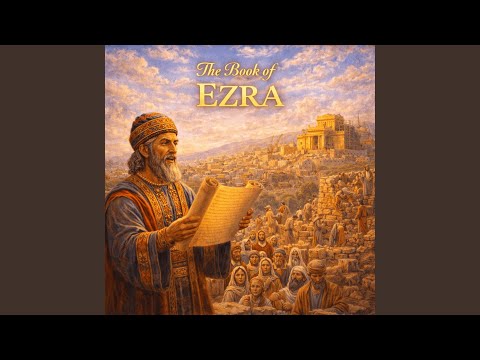
Ezra 9King James Version
1Now when these things were done, the princes came to me, saying, The people of Israel, and the priests, and the Levites, have not separated themselves from the people of the lands, doing according to their abominations, even of the Canaanites, the Hittites, the Perizzites, the Jebusites, the Ammonites, the Moabites, the Egyptians, and the Amorites.
2For they have taken of their daughters for themselves, and for their sons: so that the holy seed have mingled themselves with the people of those lands: yea, the hand of the princes and rulers hath been chief in this trespass.
3And when I heard this thing, I rent my garment and my mantle, and plucked off the hair of my head and of my beard, and sat down astonied.
4Then were assembled unto me every one that trembled at the words of the God of Israel, because of the transgression of those that had been carried away; and I sat astonied until the evening sacrifice.
5And at the evening sacrifice I arose up from my heaviness; and having rent my garment and my mantle, I fell upon my knees, and spread out my hands unto the LORD my God,
6And said, O my God, I am ashamed and blush to lift up my face to thee, my God: for our iniquities are increased over our head, and our trespass is grown up unto the heavens.
7Since the days of our fathers have we been in a great trespass unto this day; and for our iniquities have we, our kings, and our priests, been delivered into the hand of the kings of the lands, to the sword, to captivity, and to a spoil, and to confusion of face, as it is this day.
8And now for a little space grace hath been shewed from the LORD our God, to leave us a remnant to escape, and to give us a nail in his holy place, that our God may lighten our eyes, and give us a little reviving in our bondage.
9For we were bondmen; yet our God hath not forsaken us in our bondage, but hath extended mercy unto us in the sight of the kings of Persia, to give us a reviving, to set up the house of our God, and to repair the desolations thereof, and to give us a wall in Judah and in Jerusalem.
10And now, O our God, what shall we say after this? for we have forsaken thy commandments,
11Which thou hast commanded by thy servants the prophets, saying, The land, unto which ye go to possess it, is an unclean land with the filthiness of the people of the lands, with their abominations, which have filled it from one end to another with their uncleanness.
12Now therefore give not your daughters unto their sons, neither take their daughters unto your sons, nor seek their peace or their wealth for ever: that ye may be strong, and eat the good of the land, and leave it for an inheritance to your children for ever.
13And after all that is come upon us for our evil deeds, and for our great trespass, seeing that thou our God hast punished us less than our iniquities deserve, and hast given us such deliverance as this;
14Should we again break thy commandments, and join in affinity with the people of these abominations? wouldest not thou be angry with us till thou hadst consumed us, so that there should be no remnant nor escaping?
15O LORD God of Israel, thou art righteous: for we remain yet escaped, as it is this day: behold, we are before thee in our trespasses: for we cannot stand before thee because of this.
About Ezra 9
Ezra discovers that many of the returned exiles, including priests and Levites, have married foreign women. He tears his clothes, pulls hair from his head and beard, and sits appalled until the evening sacrifice. Then he falls on his knees and prays a prayer of national confession: we have sinned, we have nothing to plead, yet thou art righteous.
What happens here?
Shortly after arriving, the leaders report to Ezra that many Israelites, including priests and Levites, have married women from the surrounding peoples. Ezra tears his clothes, pulls out his hair, and sits in stunned silence for hours. At the evening sacrifice he falls to his knees and prays aloud, not demanding judgment but confessing collective guilt. He frames Israel's history as a cycle of trespass, and calls the current moment a small window of grace that is being squandered.
The big idea?
Ezra responds to the community's failure not by lecturing them but by absorbing their guilt into himself, which creates a space for the community to respond.
A line to remember
6: "And said, O my God, I am ashamed and blush to lift up my face to thee, my God: for our iniquities are increased over our head, and our trespass is grown up unto the heavens." Not someone else's failure: our iniquities, our trespass.
Set the scene
The mixed marriage issue was not about ethnicity but about covenant fidelity. The surrounding peoples maintained religious practices tied to their gods, and intermarriage had historically pulled Israel's worship away from exclusive loyalty to the Lord. Ezra's grief is real, but the resolution in chapter 10 is genuinely painful. It would be dishonest to soften that.
Who's in it?
Ezra, who tears his garments and prays; the princes who bring the report; the community who gather to watch him weep; God, addressed throughout the prayer.
Why it matters
Ezra's prayer is one of the great penitential prayers in scripture. It uses we throughout, even though Ezra himself is not among those who intermarried. He identifies with the community's failure rather than condemning it from a distance. This posture, a leader taking on collective guilt, becomes a template for later Jewish and Christian penitential traditions.
For when you feel...
For when you learn about something your community has done and the shame lands on you as if you had done it yourself. Ezra sits in it for hours before he speaks. The watching crowds slowly gather around him.