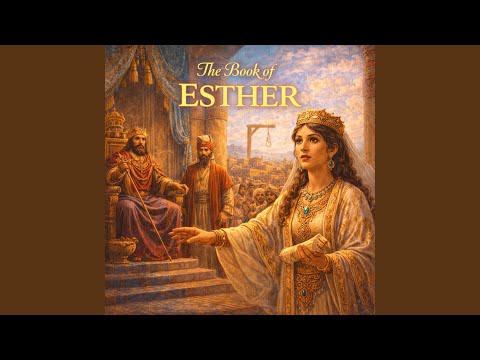
Esther 8King James Version
1On that day did the king Ahasuerus give the house of Haman the Jews' enemy unto Esther the queen. And Mordecai came before the king; for Esther had told what he was unto her.
2And the king took off his ring, which he had taken from Haman, and gave it unto Mordecai. And Esther set Mordecai over the house of Haman.
3And Esther spake yet again before the king, and fell down at his feet, and besought him with tears to put away the mischief of Haman the Agagite, and his device that he had devised against the Jews.
4Then the king held out the golden sceptre toward Esther. So Esther arose, and stood before the king,
5And said, If it please the king, and if I have found favour in his sight, and the thing seem right before the king, and I be pleasing in his eyes, let it be written to reverse the letters devised by Haman the son of Hammedatha the Agagite, which he wrote to destroy the Jews which are in all the king's provinces:
6For how can I endure to see the evil that shall come unto my people? or how can I endure to see the destruction of my kindred?
7Then the king Ahasuerus said unto Esther the queen and to Mordecai the Jew, Behold, I have given Esther the house of Haman, and him they have hanged upon the gallows, because he laid his hand upon the Jews.
8Write ye also for the Jews, as it liketh you, in the king's name, and seal it with the king's ring: for the writing which is written in the king's name, and sealed with the king's ring, may no man reverse.
9Then were the king's scribes called at that time in the third month, that is, the month Sivan, on the three and twentieth day thereof; and it was written according to all that Mordecai commanded unto the Jews, and to the lieutenants, and the deputies and rulers of the provinces which are from India unto Ethiopia, an hundred twenty and seven provinces, unto every province according to the writing thereof, and unto every people after their language, and to the Jews according to their writing, and according to their language.
10And he wrote in the king Ahasuerus' name, and sealed it with the king's ring, and sent letters by posts on horseback, and riders on mules, camels, and young dromedaries:
11Wherein the king granted the Jews which were in every city to gather themselves together, and to stand for their life, to destroy, to slay, and to cause to perish, all the power of the people and province that would assault them, both little ones and women, and to take the spoil of them for a prey,
12Upon one day in all the provinces of king Ahasuerus, namely, upon the thirteenth day of the twelfth month, which is the month Adar.
13The copy of the writing for a commandment to be given in every province was published unto all people, and that the Jews should be ready against that day to avenge themselves on their enemies.
14So the posts that rode upon mules and camels went out, being hastened and pressed on by the king's commandment. And the decree was given at Shushan the palace.
15And Mordecai went out from the presence of the king in royal apparel of blue and white, and with a great crown of gold, and with a garment of fine linen and purple: and the city of Shushan rejoiced and was glad.
16The Jews had light, and gladness, and joy, and honour.
17And in every province, and in every city, whithersoever the king's commandment and his decree came, the Jews had joy and gladness, a feast and a good day. And many of the people of the land became Jews; for the fear of the Jews fell upon them.
About Esther 8
Esther pleads for her people. The original decree cannot be revoked under Persian law, but the king issues a second decree allowing the Jews to defend themselves on the appointed day. Mordecai goes out in royal robes of blue and white. The city of Shushan rejoices. Many people become Jews because the fear of the Jews has fallen on them.
What happens here?
Ahasuerus gives Haman's estate to Esther and installs Mordecai over it. Esther reveals her relationship to Mordecai. She then pleads for a counter-decree: the original edict cannot be revoked, but a new edict is drafted allowing Jews throughout the empire to arm, defend themselves, and counterattack any who threaten them. The decree goes out by the fastest couriers. In Susa, there is celebration. Throughout the empire, many people convert to Judaism out of fear.
The big idea?
Deliverance comes not through erasure of the threat but through the right to resist it. The Jewish people are given back their agency.
A line to remember
verse: "For Mordecai was great in the king's house, and his fame went out throughout all provinces: for this man Mordecai waxed greater and greater." (9:4, preview -- the fruit of ch. 8's reversal). For ch. 8 itself: "Then Esther spake yet again before the king, and fell down at his feet, and besought him with tears to put away the mischief of Haman the Agagite, and his device that he had devised against the Jews." (8:3) -- Even after the victory of chapter 7, she does not stop. The threat is still in writing across the empire.
Set the scene
Susa palace, 474 BC, just days after Haman's execution. Mordecai is now wearing royal robes. Scribes are assembled from across the empire, writing the counter-edict in every language and script. Couriers mount the fastest horses in the royal stables, bred for speed on the royal road. In Susa, the Jewish community receives the news and the city breaks into celebration. Across the provinces, people reassess their allegiances.
Who's in it?
Esther -- still pressing, not satisfied with personal victory while the decree stands; Mordecai -- elevated to Haman's former position, using the access for communal protection; Ahasuerus -- willing to act, constrained by his own law from full reversal.
Why it matters
Chapter 8 handles the structural problem that chapter 7 left unresolved: Haman is dead but his decree is still operative. Persian law could not simply be rescinded. The counter-decree is a legal workaround, a second law standing against the first. It is also a transfer of agency: the Jews are authorized to fight back, to organize, to arm. The celebration in Susa signals that the political winds have fully shifted.
For when you feel...
Esther weeps at the king's feet even after winning. The threat is still alive in every province, written in the king's name. She does not stop until it is addressed.