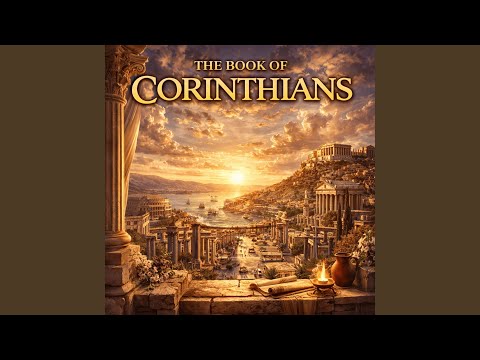
1 Corinthians 1King James Version
1Paul, called to be an apostle of Jesus Christ through the will of God, and Sosthenes our brother,
2Unto the church of God which is at Corinth, to them that are sanctified in Christ Jesus, called to be saints, with all that in every place call upon the name of Jesus Christ our Lord, both theirs and ours:
3Grace be unto you, and peace, from God our Father, and from the Lord Jesus Christ.
4I thank my God always on your behalf, for the grace of God which is given you by Jesus Christ;
5That in every thing ye are enriched by him, in all utterance, and in all knowledge;
6Even as the testimony of Christ was confirmed in you:
7So that ye come behind in no gift; waiting for the coming of our Lord Jesus Christ:
8Who shall also confirm you unto the end, that ye may be blameless in the day of our Lord Jesus Christ.
9God is faithful, by whom ye were called unto the fellowship of his Son Jesus Christ our Lord.
10Now I beseech you, brethren, by the name of our Lord Jesus Christ, that ye all speak the same thing, and that there be no divisions among you; but that ye be perfectly joined together in the same mind and in the same judgment.
11For it hath been declared unto me of you, my brethren, by them which are of the house of Chloe, that there are contentions among you.
12Now this I say, that every one of you saith, I am of Paul; and I of Apollos; and I of Cephas; and I of Christ.
13Is Christ divided? was Paul crucified for you? or were ye baptized in the name of Paul?
14I thank God that I baptized none of you, but Crispus and Gaius;
15Lest any should say that I had baptized in mine own name.
16And I baptized also the household of Stephanas: besides, I know not whether I baptized any other.
17For Christ sent me not to baptize, but to preach the gospel: not with wisdom of words, lest the cross of Christ should be made of none effect.
18For the preaching of the cross is to them that perish foolishness; but unto us which are saved it is the power of God.
19For it is written, I will destroy the wisdom of the wise, and will bring to nothing the understanding of the prudent.
20Where is the wise? where is the scribe? where is the disputer of this world? hath not God made foolish the wisdom of this world?
21For after that in the wisdom of God the world by wisdom knew not God, it pleased God by the foolishness of preaching to save them that believe.
22For the Jews require a sign, and the Greeks seek after wisdom:
23But we preach Christ crucified, unto the Jews a stumblingblock, and unto the Greeks foolishness;
24But unto them which are called, both Jews and Greeks, Christ the power of God, and the wisdom of God.
25Because the foolishness of God is wiser than men; and the weakness of God is stronger than men.
26For ye see your calling, brethren, how that not many wise men after the flesh, not many mighty, not many noble, are called:
27But God hath chosen the foolish things of the world to confound the wise; and God hath chosen the weak things of the world to confound the things which are mighty;
28And base things of the world, and things which are despised, hath God chosen, yea, and things which are not, to bring to nought things that are:
29That no flesh should glory in his presence.
30But of him are ye in Christ Jesus, who of God is made unto us wisdom, and righteousness, and sanctification, and redemption:
31That, according as it is written, He that glorieth, let him glory in the Lord.
About 1 Corinthians 1
Paul writes to the church at Corinth, which is full of factions. Now I beseech you, brethren, that there be no divisions among you. The preaching of the cross is to them that perish foolishness; but unto us which are saved it is the power of God. God hath chosen the foolish things of the world to confound the wise. He that glorieth, let him glory in the Lord.
What happens here?
Paul opens his letter to the fractured church at Corinth with a greeting and thanksgiving, then immediately confronts the divisions tearing the congregation apart. Rival factions have formed around different leaders, Paul, Apollos, Cephas, Christ. He argues that this tribalism is a contradiction of the gospel itself, which centers on a crucified Messiah: an offense to Jews and foolishness to Greeks, yet the power of God.
The big idea?
The cross shatters every human hierarchy of wisdom and status. Choosing a spiritual celebrity over the crucified Christ is a category error about what the gospel actually is.
A line to remember
"But God hath chosen the foolish things of the world to confound the wise; and God hath chosen the weak things of the world to confound the things which are mighty." (1:27) Paul frames the entire Corinthian social pecking order as something God deliberately inverts, making every status competition inside the church self-defeating.
Set the scene
Corinth in 55 AD is a rebuilt Roman colony, just a hundred years old but already filthy rich from trade between the Aegean and Adriatic seas. The church meets in houses, probably including the home of Gaius, a person wealthy enough to host the whole congregation. Chloe, whose people carry the bad news to Paul in Ephesus, is likely a merchant with commercial connections in both cities.
Who's in it?
Paul is the founding apostle writing from Ephesus with urgency and pastoral pain. Sosthenes is likely his co-sender, possibly the same synagogue ruler beaten before Gallio in Acts 18. Apollos and Cephas (Peter) are not villains but have become unwitting mascots for factions they never authorized. Chloe's household is the unnamed source that reported the divisions to Paul.
Why it matters
Corinth was Rome's wealthiest port city in Greece, a commercial crossroads where social climbing and rhetorical skill carried enormous prestige. The church there replicated those values inside its walls. Paul's opening argument is theological: the message of a crucified criminal as Lord of all could not coexist with a community organized around impressive speakers and patron networks. The divisions signal a misunderstanding of the gospel at the root.
For when you feel...
There is a restrained grief in Paul's tone here. He thanks God for this church, names their gifts, then turns and names their failure directly. He is not distant; he is disappointed in the way a parent is disappointed.