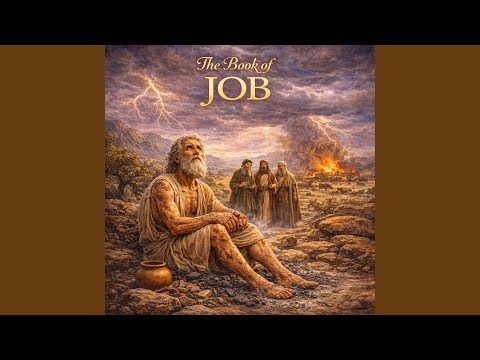
Job 27King James Version
1Moreover Job continued his parable, and said,
2As God liveth, who hath taken away my judgment; and the Almighty, who hath vexed my soul;
3All the while my breath is in me, and the spirit of God is in my nostrils;
4My lips shall not speak wickedness, nor my tongue utter deceit.
5God forbid that I should justify you: till I die I will not remove mine integrity from me.
6My righteousness I hold fast, and will not let it go: my heart shall not reproach me so long as I live.
7Let mine enemy be as the wicked, and he that riseth up against me as the unrighteous.
8For what is the hope of the hypocrite, though he hath gained, when God taketh away his soul?
9Will God hear his cry when trouble cometh upon him?
10Will he delight himself in the Almighty? will he always call upon God?
11I will teach you by the hand of God: that which is with the Almighty will I not conceal.
12Behold, all ye yourselves have seen it; why then are ye thus altogether vain?
13This is the portion of a wicked man with God, and the heritage of oppressors, which they shall receive of the Almighty.
14If his children be multiplied, it is for the sword: and his offspring shall not be satisfied with bread.
15Those that remain of him shall be buried in death: and his widows shall not weep.
16Though he heap up silver as the dust, and prepare raiment as the clay;
17He may prepare it, but the just shall put it on, and the innocent shall divide the silver.
18He buildeth his house as a moth, and as a booth that the keeper maketh.
19The rich man shall lie down, but he shall not be gathered: he openeth his eyes, and he is not.
20Terrors take hold on him as waters, a tempest stealeth him away in the night.
21The east wind carrieth him away, and he departeth: and as a storm hurleth him out of his place.
22For God shall cast upon him, and not spare: he would fain flee out of his hand.
23Men shall clap their hands at him, and shall hiss him out of his place.
About Job 27
Job insists on his integrity. Till I die I will not remove my integrity from me. My righteousness I hold fast, and will not let it go. The chapter ends with a description of the fate of the wicked that sounds almost like the friends, as if the text is giving them one more voice before closing them out.
What happens here?
Job swears by the living God who has taken away his right: he will not speak wickedness or lie. He will not admit the friends are right. He pronounces a curse on his enemy that sounds like the friends' theology applied to actual enemies, the wicked who have no hope when they die, whose children perish by the sword, whose widow does not weep for them. This is one of the more complex chapters in Job, with some scholars debating whether the speaker shifts.
The big idea?
Job will not recant. He applies the retribution theology of the friends to his real enemies, the wicked, not to himself, maintaining the distinction between his case and theirs.
A line to remember
5: "God forbid that I should justify you: till I die I will not remove mine integrity from me." Job's most direct refusal of the friends' demand. He will not confess sins he has not committed.
Set the scene
Oaths sworn by a deity in the ancient world were as serious as any legal contract. To swear by God that you will not lie is to put your soul on the line. Job is not making a rhetorical flourish. He is putting his theological claim on record before the divine court.
Who's in it?
Job continues speaking. Some interpreters believe the description of the wicked in the second half of this chapter may represent Zophar's expected third speech (which never appears), but the dominant reading keeps Job as the speaker throughout.
Why it matters
Job's oath by the living God who has denied him justice is theologically complex: he is swearing by the God who has mistreated him. The relationship is intact even in the accusation. He cannot swear by anyone else.
For when you feel...
The line about not removing integrity from himself is the spine of the entire book. Everything else is argument and poetry. This is the refusal at the center of it all.