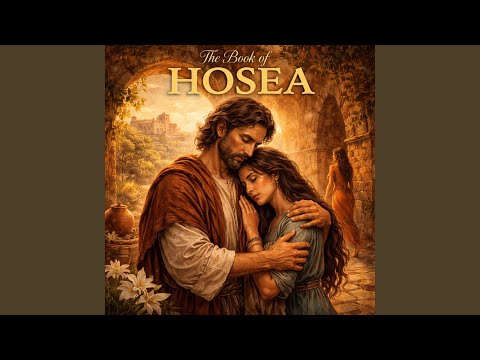
Hosea 11King James Version
1When Israel was a child, then I loved him, and called my son out of Egypt.
2As they called them, so they went from them: they sacrificed unto Baalim, and burned incense to graven images.
3I taught Ephraim also to go, taking them by their arms; but they knew not that I healed them.
4I drew them with cords of a man, with bands of love: and I was to them as they that take off the yoke on their jaws, and I laid meat unto them.
5He shall not return into the land of Egypt, but the Assyrian shall be his king, because they refused to return.
6And the sword shall abide on his cities, and shall consume his branches, and devour them, because of their own counsels.
7And my people are bent to backsliding from me: though they called them to the most High, none at all would exalt him.
8How shall I give thee up, Ephraim? how shall I deliver thee, Israel? how shall I make thee as Admah? how shall I set thee as Zeboim? mine heart is turned within me, my repentings are kindled together.
9I will not execute the fierceness of mine anger, I will not return to destroy Ephraim: for I am God, and not man; the Holy One in the midst of thee: and I will not enter into the city.
10They shall walk after the LORD: he shall roar like a lion: when he shall roar, then the children shall tremble from the west.
11They shall tremble as a bird out of Egypt, and as a dove out of the land of Assyria: and I will place them in their houses, saith the LORD.
12Ephraim compasseth me about with lies, and the house of Israel with deceit: but Judah yet ruleth with God, and is faithful with the saints.
About Hosea 11
One of the most tender chapters in the book. When Israel was a child, then I loved him, and called my son out of Egypt. I taught Ephraim also to go, taking them by their arms; but they knew not that I healed them. How shall I give thee up, Ephraim? How shall I deliver thee, Israel? My heart is turned within me. My repentings are kindled together.
What happens here?
God remembers Israel's childhood with the tenderness of a parent who taught a toddler to walk, held his arms, lifted him when he stumbled. But the child kept running to idols. The Assyrian will now be his king. Then God's heart turns within him: 'How shall I give you up, Ephraim?' He will not execute the full fury of his anger. He is God, not man, and his compassion is not like human love that finally runs dry.
The big idea?
God's love for Israel is parental, specific, and remembered in detail, and that remembered love is precisely what makes him unable to simply destroy what he raised.
A line to remember
verse: "How shall I give thee up, Ephraim? how shall I deliver thee, Israel? mine heart is turned within me, my repentings are kindled together." (11:8): The most unguarded display of divine anguish in the Hebrew prophets, God arguing with himself about whether he can walk away.
Set the scene
By the time Hosea speaks these words, perhaps 727-725 BC, the northern kingdom has less than five years left. Hoshea is king, paying tribute then stopping payment when he sought Egypt's help. Assyrian armies under Shalmaneser V will besiege Samaria for three years before taking it in 722 BC.
Who's in it?
God speaks entirely in this chapter, first as a parent recalling childhood, then as a grieving father unable to pronounce the final sentence. Ephraim and Israel are addressed as a beloved child who keeps running away. Egypt is where the child came from; Assyria is where the child is heading.
Why it matters
Chapter 11 is the emotional center of the entire book. The parental imagery, teaching a child to walk, removing the yoke from his neck, bending down to feed him, accumulates into a portrait of God's love that is not strategic or transactional but simply intimate and bewildered by rejection. Verse 8 is the hinge of the whole book, where judgment could have fallen and instead found mercy.
For when you feel...
Reading verse 8 is almost intrusive, as if catching someone in the middle of a conversation they are having with themselves in a dark room. The grief is not performed; it is raw.