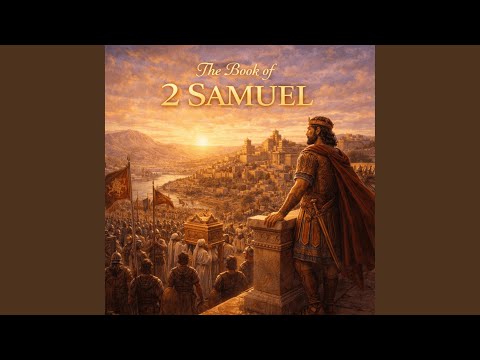
2 Samuel 12King James Version
1And the LORD sent Nathan unto David. And he came unto him, and said unto him, There were two men in one city; the one rich, and the other poor.
2The rich man had exceeding many flocks and herds:
3But the poor man had nothing, save one little ewe lamb, which he had bought and nourished up: and it grew up together with him, and with his children; it did eat of his own meat, and drank of his own cup, and lay in his bosom, and was unto him as a daughter.
4And there came a traveller unto the rich man, and he spared to take of his own flock and of his own herd, to dress for the wayfaring man that was come unto him; but took the poor man's lamb, and dressed it for the man that was come to him.
5And David's anger was greatly kindled against the man; and he said to Nathan, As the LORD liveth, the man that hath done this thing shall surely die:
6And he shall restore the lamb fourfold, because he did this thing, and because he had no pity.
7And Nathan said to David, Thou art the man. Thus saith the LORD God of Israel, I anointed thee king over Israel, and I delivered thee out of the hand of Saul;
8And I gave thee thy master's house, and thy master's wives into thy bosom, and gave thee the house of Israel and of Judah; and if that had been too little, I would moreover have given unto thee such and such things.
9Wherefore hast thou despised the commandment of the LORD, to do evil in his sight? thou hast killed Uriah the Hittite with the sword, and hast taken his wife to be thy wife, and hast slain him with the sword of the children of Ammon.
10Now therefore the sword shall never depart from thine house; because thou hast despised me, and hast taken the wife of Uriah the Hittite to be thy wife.
11Thus saith the LORD, Behold, I will raise up evil against thee out of thine own house, and I will take thy wives before thine eyes, and give them unto thy neighbour, and he shall lie with thy wives in the sight of this sun.
12For thou didst it secretly: but I will do this thing before all Israel, and before the sun.
13And David said unto Nathan, I have sinned against the LORD. And Nathan said unto David, The LORD also hath put away thy sin; thou shalt not die.
14Howbeit, because by this deed thou hast given great occasion to the enemies of the LORD to blaspheme, the child also that is born unto thee shall surely die.
15And Nathan departed unto his house. And the LORD struck the child that Uriah's wife bare unto David, and it was very sick.
16David therefore besought God for the child; and David fasted, and went in, and lay all night upon the earth.
17And the elders of his house arose, and went to him, to raise him up from the earth: but he would not, neither did he eat bread with them.
18And it came to pass on the seventh day, that the child died. And the servants of David feared to tell him that the child was dead: for they said, Behold, while the child was yet alive, we spake unto him, and he would not hearken unto our voice: how will he then vex himself, if we tell him that the child is dead?
19But when David saw that his servants whispered, David perceived that the child was dead: therefore David said unto his servants, Is the child dead? And they said, He is dead.
20Then David arose from the earth, and washed, and anointed himself, and changed his apparel, and came into the house of the LORD, and worshipped: then he came to his own house; and when he required, they set bread before him, and he did eat.
21Then said his servants unto him, What thing is this that thou hast done? thou didst fast and weep for the child, while it was alive; but when the child was dead, thou didst rise and eat bread.
22And he said, While the child was yet alive, I fasted and wept: for I said, Who can tell whether GOD will be gracious to me, that the child may live?
23But now he is dead, wherefore should I fast? can I bring him back again? I shall go to him, but he shall not return to me.
24And David comforted Bathsheba his wife, and went in unto her, and lay with her: and she bare a son, and he called his name Solomon: and the LORD loved him.
25And he sent by the hand of Nathan the prophet; and he called his name Jedidiah, because of the LORD.
26And Joab fought against Rabbah of the children of Ammon, and took the royal city.
27And Joab sent messengers to David, and said, I have fought against Rabbah, and have taken the city of waters.
28Now therefore gather the rest of the people together, and encamp against the city, and take it: lest I take the city, and it be called after my name.
29And David gathered all the people together, and went to Rabbah, and fought against it, and took it.
30And he took their king's crown from off his head, the weight whereof was a talent of gold with the precious stones: and it was set on David's head. And he brought forth the spoil of the city in great abundance.
31And he brought forth the people that were therein, and put them under saws, and under harrows of iron, and under axes of iron, and made them pass through the brickkiln: and thus did he unto all the cities of the children of Ammon. So David and all the people returned unto Jerusalem.
About 2 Samuel 12
The prophet Nathan comes to David and tells him a story about a rich man who took a poor man's only lamb. David is outraged and pronounces judgment. Nathan says, 'Thou art the man.' David breaks down and says, 'I have sinned against the Lord.' The child born to Bathsheba grows sick and dies. David's repentance does not undo the consequences. Later Bathsheba bears another son, Solomon.
What happens here?
Nathan the prophet comes to David and tells a parable about a rich man who takes a poor man's only lamb. David demands justice. Nathan says: you are that man. He pronounces judgment: the sword will never leave David's house, his wives will be taken publicly, and the child will die. David repents immediately and simply. The child dies. David rises, eats, and worships. Bathsheba's second son is named Solomon. Rabbah finally falls.
The big idea?
Confession is not negotiation. David says 'I have sinned' and Nathan says the LORD has put away the sin, and a baby still dies, and David still worships God afterward.
A line to remember
13: "And David said unto Nathan, I have sinned against the LORD. And Nathan said unto David, The LORD also hath put away thy sin; thou shalt not die." The confession is immediate, three words in Hebrew. The forgiveness is immediate. The consequences are not canceled.
Set the scene
Around 990 BC. Nathan's arrival marks the one moment in 2 Samuel where God intervenes directly in David's story through a prophet. The parable is a masterpiece of oblique confrontation: letting David judge the crime before he realizes he is judging himself. In the background, the Ammonite siege of Rabbah is still ongoing, and it concludes at the end of this same chapter, giving David a public military victory even as his private life is in ruins.
Who's in it?
Nathan, the prophet who tells a parable that breaks past David's defenses; David, who confesses and then does something strange: he stops grieving the moment the child dies; Bathsheba, who loses a son; Solomon, the second son, named Jedidiah by God.
Why it matters
The Nathan confrontation is one of the great prophetic moments in scripture: a story that bypasses the king's self-justification and makes him condemn himself. Psalm 51 is traditionally assigned to this moment. David's grief while the child lives, followed by his composed return to eating and worship after the death, baffles his servants. His explanation, 'I shall go to him, but he shall not return to me,' is one of the most quoted lines in the book.
For when you feel...
For when you have done something that cannot be undone and the question is whether you can live forward from it. David does not die. He eats, washes, and goes to worship. That is not callousness; it is grief that has found its floor.